


Every vendor has an agent demo that looks like magic. Strip that away and the real picture is more useful: what AI agents reliably do in production today, where they still break, and what your team should actually ship this quarter.
The Honest State of AI Agents in Production#
Every vendor has a demo that looks like magic. Strip that away and the picture is more interesting, and more actionable. Agents are genuinely showing up in production, but overwhelmingly in narrow, supervised roles, not the autonomous everything-assistants the keynotes imply. And shipping an agent is not the same as getting durable ROI from one. The teams doing it well share a pattern: tight scope, rich tool access, and a human still in the loop for anything consequential.
where agents reliably earn their keep in production today
still firmly in research territory, not production
stalls more agent projects than model quality does
a practical ceiling for reliable autonomous chains before errors compound
Shipping an agent and getting durable ROI from an agent are two completely different things.
What Actually Works in Production Right Now#
The common thread across successful deployments isn't raw intelligence, it's constraint. Agents that work are agents with a small, legible action space, reliable tool APIs, and a clear escalation path. Here's where the production wins are real:
Support Triage
Classify inbound tickets, pull context from CRM and docs, draft a response or route to the right queue. Low blast radius. Measurable deflection rates.

Code-Review Assist
Engineering teams are running agents that flag style violations, surface test coverage gaps, and summarize PR diffs. Engineers review, not rubber-stamp.

Data Extraction & Enrichment
Scrape, normalize, deduplicate, enrich, against structured sources. Deterministic-ish pipelines that tolerate occasional LLM imprecision without catastrophe.

Research Synthesis
Multi-source document retrieval + summarization with citations. High-value output, low-consequence if one source is slightly off, a human still reads the brief.
Finance offers some of the clearest production signal. Advisor-assist agents, the kind that surface the right client context during volatile markets, earn their place not by replacing advisor judgment but by compressing the time it takes to reach it. That is the template that travels: agents that compress the human's work, not agents that try to replace the human entirely.
Key point
The production pattern that works: narrow scope + rich tool access + human escalation path. Any agent missing two of those three is a liability dressed as a feature.
Where They Still Break#
Long-horizon autonomy, where an agent plans, executes, and adapts over dozens of steps without a human checkpoint, remains firmly in research territory. The failure modes are well-documented and, critically, often silent. By the time a compounding error surfaces, it's already propagated through downstream state.
- Compounding errors: Small inaccuracies multiply across multi-step chains. A single step with 95% accuracy repeated across multiple steps yields compounding accuracy loss. This is a mechanical limitation of current architectures.
- Non-replayable decisions: Agents that send emails, commit code, or modify records can't be easily rolled back. The blast radius of a single bad inference step is asymmetric.
- No hard veto layers: Most current architectures lack robust guardrails that can interrupt mid-execution. The agent finishes before a human can object.
- Silent failure: The model confidently completes a subtask incorrectly and moves on. Without structured evals at each step, no one knows until the end, or later.
- Runaway cost: Agentic loops calling expensive frontier models with large context windows can become significantly more expensive per task than direct API calls, burning through budgets on edge-case inputs.
- Ambiguous accountability: In regulated domains, finance, healthcare, legal, who owns an agent's decision? Compliance and legal teams are still figuring this out, and that uncertainty kills deployment timelines.
Heads-up
Gartner put a number on this in June 2025: it expects more than 40% of agentic AI projects to be cancelled by the end of 2027, and the causes it names are escalating costs, unclear business value and inadequate risk controls, not model capability. That ordering matches what the deployments above have in common. Infrastructure and organisational gaps kill more agent projects than the model ever does, which is inconvenient, because the model is the part everyone wants to talk about.
It is worth being precise about why cost is the first thing on that list, because the shape of it surprises teams who have only priced single calls. An agent does not make one request per step; it re-sends its accumulated history and every tool result it has collected so far, so the context it carries grows as the run goes on. Cost therefore rises faster than the step count does: doubling the length of a chain more than doubles the bill. That is the same curve as the reliability ceiling described above, seen from the other end: the steps that compound errors are the steps that compound spend, which is why "just let it run longer" fails on two axes at once rather than one. Before committing to a chain length, put your model, step count and expected volume into the AI agent cost calculator: the number is usually the argument that settles the scope debate.
Ship It vs. Still Research: The Honest Comparison#
AI Agents: Production-Ready vs. Still R&D
Production-Ready
Ship It Now
- Well-scoped, single-domain tasks (triage, extraction, summarization)
- Tool-using agents with structured APIs and predictable outputs
- Human-in-the-loop for any consequential or irreversible action
- Short chains with evals at each node
- Clear success metrics tied to existing KPIs
- Support, code review assist, data enrichment, research synthesis
Not Production-Safe
Still Research
- Long-horizon autonomy with minimal human checkpoints
- Agents operating across heterogeneous systems (email, calendar, CRM) without deterministic connectors
- Multi-agent orchestration in high-consequence or regulated domains
- Any workflow where silent failure has real downstream cost
- Full inbox/calendar management replacing human judgment
- Autonomous financial or legal decision execution
What Engineering Teams Should Do This Quarter#
The most common mistake isn't being too ambitious with agents, it's being ambitious in the wrong direction. Teams chase long-horizon autonomy (the hard part) while under-investing in evaluation infrastructure (the boring part that makes or breaks production viability). Here's what actually moves the needle this quarter:
The Infrastructure Gap Nobody Talks About Enough#
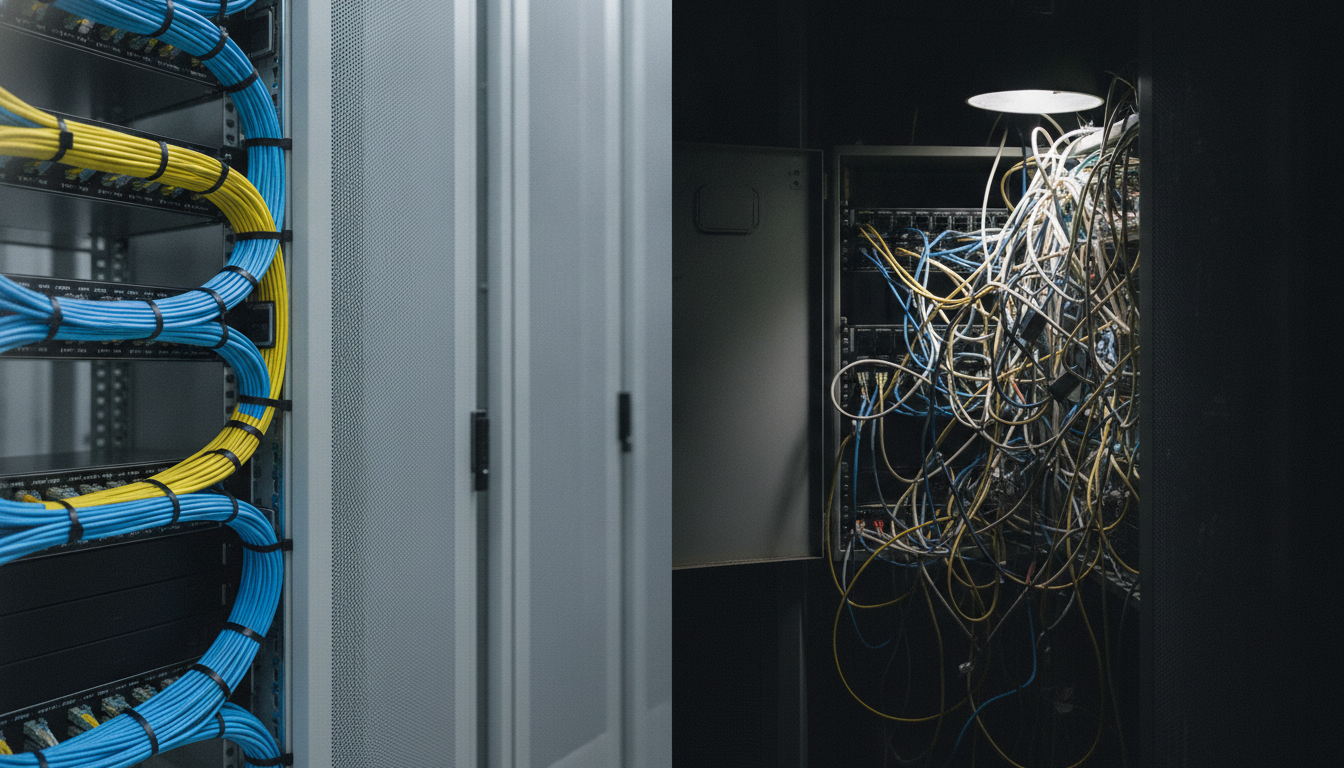
Most agent post-mortems blame the model. Most of the time, the real culprit is infrastructure: no structured evals, no cost monitoring, no rollback capability, no clear ownership boundary between agent and human. In practice, reliable cross-system integration, email, calendars, CRMs, remains a persistent architectural challenge; those surfaces are asynchronous, stateful, and hostile to the deterministic tool-calling agents depend on. Until that plumbing is robust, full office-automation agents remain aspirational.
Pros
- Measurable ROI on narrow, scoped tasks, deflection rates, response time, throughput are easy to instrument
- Compresses high-skilled human work rather than replacing it, which is more defensible and delivers faster time-to-value
- Maturing ecosystem of orchestration and evaluation tools reduces build complexity significantly
- Real production signal from finance, healthcare, and engineering teams, enough case studies to de-risk the business case
Cons
- Silent failure is the default, without step-level evals, you won't know the agent is wrong until the damage is done
- Cost unpredictability in agentic loops is a genuine production risk, especially with frontier models and large context windows
- Accountability gaps in regulated domains create legal and compliance blockers that technical teams can't resolve alone
- Compounding errors make long chains fundamentally unreliable with current LLM architectures, this is a hard constraint, not a tuning problem
What kinds of tasks are AI agents reliably good at in production today?
Narrow, well-scoped tasks with structured tool access: support ticket triage, code-review assistance, data extraction and enrichment, and research synthesis. The common factor is a short action chain, clear success criteria, and a human available to review or escalate on consequential outputs.
Why do so many agentic AI projects fail in production?
The primary culprits are infrastructure problems, no step-level evals, no cost controls, no rollback capability, rather than model quality. Compounding errors across multi-step chains and ambiguous accountability in regulated domains are also major factors.
How should engineering teams manage the cost risk of agentic loops?
Set hard per-task budget caps in your orchestration layer before deploying. Agentic loops calling frontier models with large context windows can become substantially more expensive per task than a single direct API call. Cost should be a first-class constraint in your architecture, not an afterthought.
When will long-horizon autonomous agents be production-safe?
That depends less on model capability than on the maturity of the surrounding infrastructure: robust eval frameworks, hard veto/interrupt layers, and reliable cross-system integrations. Full long-horizon autonomy in high-consequence domains remains an open research problem, and teams building eval and observability infrastructure today will be best positioned to deploy it safely as the ecosystem matures.


Discussion